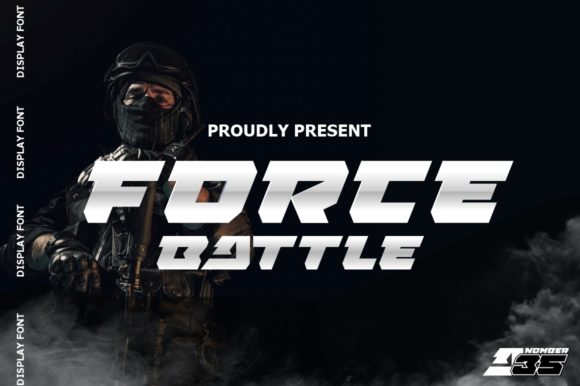
Force Battle: The Bold Display Font That Demands Attention
In a digital landscape saturated with clean, minimalist sans-serifs and elegant serifs, standing out often requires breaking the rules. Enter Force Battle, a bold and aggressive display font designed to turn heads and command respect. This isn’t just another typeface; it is a visual shout in a room full of whispers. If you are looking to inject energy, intensity, and raw power into your projects, adding this chunky lettered font to your designs will make them come alive.
Force Battle is characterized by its heavy weight, sharp angles, and unapologetic presence. It doesn’t ask for permission; it takes up space. For designers, marketers, and creators aged 20–50 who need their work to resonate instantly, understanding how to wield this tool effectively can be the difference between a forgotten post and a viral sensation. Let’s explore where this font shines, who benefits from its intensity, and how to use it without overwhelming your audience.
The Psychology of Aggression in Typography
Before diving into specific use cases, it helps to understand why Force Battle works. Typography is not merely about readability; it is about emotion. A soft, rounded font conveys approachability and calm. In contrast, a font like Force Battle triggers a physiological response associated with action, urgency, and strength. The thick strokes and jagged edges mimic the visual language of impact—think explosions, collisions, and high-stakes moments.
This makes it an incredibly powerful asset for brands that want to position themselves as leaders, disruptors, or pioneers. When you apply Force Battle to a headline, you are subconsciously telling the viewer that this message is important, urgent, and non-negotiable. However, because it is so dominant, it must be used strategically. It is not a background texture; it is the main event.
Real-World Applications: Where Force Battle Shines
The versatility of a display font lies in its context. While you wouldn’t use Force Battle for a long-form blog post or a legal contract, its potential is limitless in short, punchy applications. Here are several industries and scenarios where this font delivers exceptional results.
1. Gaming Esports and Competitive Sports
If there is one arena where aggression is celebrated, it is competitive gaming. Esports tournaments, team logos, and streaming overlays thrive on high-energy visuals. Force Battle fits seamlessly here. Imagine a tournament bracket or a "Live Now" banner using this font—the sharpness mirrors the precision required in gameplay. Similarly, for amateur sports leagues or local gyms, using Force Battle on flyers or social media graphics communicates toughness and dedication. It appeals directly to the athlete’s mindset.
2. Music and Entertainment Events
Concert posters, album covers, and festival lineups often rely on typography to set the mood. For rock, metal, hip-hop, or electronic music genres, Force Battle provides the perfect visual counterpart to loud, bass-heavy audio. Its chunky letters feel tactile, almost like they could be stamped onto a leather jacket or spray-painted on a wall. Event organizers can use it for headliner names or ticket sale announcements to create a sense of exclusivity and excitement.
3. Fitness and Wellness Brands
The fitness industry is moving beyond generic motivational quotes. Personal trainers, CrossFit boxes, and supplement brands are looking for ways to distinguish themselves. Force Battle works exceptionally well for branding that focuses on strength training, HIIT (High-Intensity Interval Training), or combat sports. A logo featuring this font suggests reliability and power. It tells the customer, "We don’t do easy; we do effective."
4. Automotive and Industrial Design
Car customization shops, motorcycle clubs, and industrial equipment manufacturers benefit from the mechanical feel of Force Battle. The font’s structural integrity mirrors the engineering behind heavy machinery or modified vehicles. When used on decals, business cards, or website headers, it reinforces the idea of durability and performance. It pairs particularly well with dark color palettes like matte black, charcoal, and metallic silver.
Strategic Implementation: Balancing Power and Readability
Using a font as aggressive as Force Battle comes with responsibilities. The primary challenge is ensuring that your message is not lost in the noise. Because the font demands attention, it can easily become visually exhausting if overused. Here are practical tips for integrating it into your workflow.
- Pairing is Key: Never let Force Battle do all the heavy lifting. Pair it with a simple, neutral sans-serif or serif for body text. The contrast between the chaotic energy of the display font and the calm order of the supporting text creates a balanced hierarchy. This guides the eye naturally from the headline to the details.
- Whitespace is Your Friend: Give the letters room to breathe. Aggressive fonts look best when they are isolated. Cluttering the design with too many elements dilutes the impact of the typography. Use generous margins and padding to let the font stand alone as the focal point.
- Limited Color Palettes: Avoid rainbow effects or overly complex gradients unless you are going for a very specific retro aesthetic. Solid, high-contrast colors tend to work best. White text on a black background, or bright neon yellow on deep blue, allows the shape of the letters to remain the star.
- Use for Headlines Only: Resist the urge to write paragraphs in Force Battle. It is a display font, meaning it is designed for short bursts of text. Keep headlines under five words whenever possible to maintain maximum impact.
Considerations for Different Audiences
Different users will find different value in this tool. For a freelance graphic designer, Force Battle is a quick way to add polish to client projects that require a "tough" vibe. It saves time on creating custom lettering because the font itself carries the artistic weight. For small business owners, it offers a professional shortcut to establishing a strong brand identity without hiring an expensive illustrator.
However, content creators and bloggers should exercise caution. If your brand voice is nurturing, educational, or gentle, Force Battle might send the wrong signal. It can alienate audiences looking for comfort or clarity. Always align your typography with your core message. If you are writing a serious article about mental health, a soft, readable font is more appropriate. But if you are announcing a flash sale or a limited-edition drop, Force Battle creates the necessary sense of scarcity and urgency.
Common Pitfalls to Avoid
Even the best tools can be misused. One common mistake is kerning errors. Due to the density of the letters in Force Battle, poor spacing can cause characters to merge, making text illegible. Always zoom in and adjust tracking manually when possible. Another pitfall is using low-resolution versions of the font. Display fonts lose their edge quickly when pixelated. Ensure you are using vector files or high-DPI images to preserve the crisp, aggressive lines that define the typeface.
Additionally, be mindful of cultural contexts. Aggressive imagery can sometimes be perceived as hostile rather than empowering. Test your designs with a diverse group of people to ensure the tone lands as intended. What feels exciting to one demographic might feel intimidating to another.
Final Thoughts on Making Your Designs Pop
Force Battle is more than just a font; it is a design decision that prioritizes impact over subtlety. In a world where attention spans are shrinking, having a typeface that stops the scroll is invaluable. Whether you are designing a logo for a new gym, a poster for a local concert, or a banner for an online store, this chunky lettered font adds a layer of depth and personality that standard fonts simply cannot match.
By understanding its strengths—its ability to convey power, urgency, and strength—and respecting its limitations, you can create designs that not only look good but also perform well. Start small. Try it on a single headline. See how it changes the mood of the piece. Once you notice how it makes your designs come alive, you’ll likely find countless other ways to integrate it into your creative toolkit. The key is to let it lead, but always keep the overall composition in balance.