Evaluating Sword Art: A Practical Guide to Using a Quirky Display Font
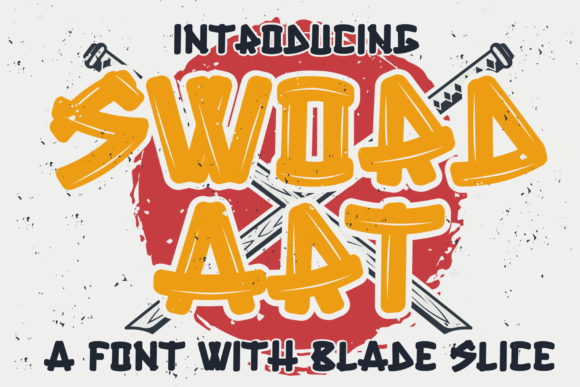
Typography plays a critical role in visual communication, acting as the bridge between raw information and emotional resonance. When designers select a typeface, they are not merely choosing legibility; they are selecting a voice. In this landscape, Sword Art emerges as a distinctive option that defies conventional categorization. It is a spectacular display font characterized by its quirky, hand-drawn aesthetic and irregular geometry. While it may not serve as a primary body text for dense reading materials, its unique character makes it an invaluable tool for specific design contexts.
This analysis explores the functional attributes of Sword Art, examining its strengths, limitations, and ideal use cases. By understanding where this font fits within the broader spectrum of display typography, designers and content creators can make more informed decisions about when to deploy it and when to seek alternatives.
Understanding the Aesthetic Identity of Sword Art
To evaluate any typeface effectively, one must first understand its stylistic roots and visual language. Sword Art is defined by its departure from rigid grid-based structures. Unlike geometric sans-serifs or traditional serif fonts that prioritize uniformity and neutrality, Sword Art embraces asymmetry and organic variation. The letterforms often feature uneven stroke weights, slight tilts, and playful distortions that mimic the energy of hand-lettering or sketchwork.
This "quirkiness" is not accidental but rather a deliberate design choice intended to evoke a sense of informality, creativity, and human touch. The font looks incredibly adept on a wide variety of contexts because it injects personality into designs that might otherwise feel sterile or corporate. It suggests movement and spontaneity, making it particularly effective for projects that aim to appear approachable, youthful, or artistic.
However, this distinctiveness comes with inherent tradeoffs. The very features that make Sword Art eye-catching—its irregularities—can hinder readability if misapplied. Designers must recognize that this is a display font, meaning it is optimized for short bursts of text at larger sizes rather than extended passages. Its value lies in its ability to grab attention quickly and establish a specific mood instantly.
Comparative Analysis: Sword Art vs. Standard Display Fonts
When evaluating Sword Art, it is helpful to compare it against other common categories of display typography. Most display fonts fall into two broad groups: those that emphasize authority and stability (such as bold slab serifs or heavy grotesques) and those that emphasize elegance and refinement (such as high-contrast didones). Sword Art occupies a third space, focusing on whimsy and eccentricity.
- Authority-Focused Fonts: Typefaces like Impact or Helvetica Now Black communicate strength and clarity. They are neutral tools suitable for headlines that need to be read instantly without distraction. Sword Art, by contrast, demands attention through its idiosyncrasies. It does not remain invisible; it asserts itself.
- Elegance-Focused Fonts: Fonts like Baskerville or Bodoni convey sophistication and tradition. They are often used in luxury branding or editorial layouts. Sword Art lacks this formal polish. Instead of suggesting heritage, it suggests innovation and playfulness.
- Hand-Lettered Alternatives: Many modern scripts and brush fonts attempt to replicate the look of handwriting. Sword Art shares this DNA but distinguishes itself through a more structured yet chaotic approach. It retains enough legibility to function as a headline while maintaining the rough edges of a sketch.
This comparison highlights that Sword Art is not a general-purpose solution. If a project requires a tone of seriousness, reliability, or minimalist cool, Sword Art would likely clash with the desired message. However, for brands seeking to stand out through humor, creativity, or nonconformity, it offers a compelling alternative to more predictable choices.
Ideal Use Cases and Contextual Fit
Determining the right context for Sword Art requires aligning the font’s personality with the goals of the project. Because it is a display font, its application should be strategic and limited. Below are several scenarios where Sword Art proves to be a strong fit.
Event Branding and Promotional Materials
Festivals, concerts, workshops, and community events often benefit from a sense of excitement and informal engagement. Sword Art’s energetic strokes can enhance posters, flyers, and social media graphics for these occasions. For example, a local art walk or a indie music gig could use Sword Art for the main title to signal that the event is fun and accessible. The font’s quirks mirror the creative nature of such gatherings, creating a cohesive visual identity.
Creative Agency Portfolios
Design studios, photography businesses, and freelance creatives often struggle to balance professionalism with personal style. Using a standard corporate font can make a portfolio feel generic, while overly decorative fonts can appear unprofessional. Sword Art strikes a middle ground. It demonstrates taste and awareness of trends without sacrificing clarity. When used sparingly for section headers or accent text, it adds a layer of curated personality to a designer’s presentation.
Educational and Children’s Content
In educational materials aimed at younger audiences, engagement is key. Textbooks, workbooks, and digital learning modules can benefit from typography that feels friendly and less intimidating. Sword Art’s playful nature can help reduce the perceived difficulty of complex topics by wrapping them in a visually inviting package. However, care must be taken to ensure that the font does not become distracting when paired with instructional diagrams or data visualizations.
Limitations and Decision Factors
No single typeface is suitable for every situation. Recognizing the limitations of Sword Art is just as important as identifying its strengths. Misapplication can lead to poor user experience, reduced accessibility, and brand confusion.
Readability Constraints
The primary limitation of Sword Art is its legibility at small sizes or in long paragraphs. The irregular shapes and varying stroke widths can cause letters to blend together when scaled down, making text difficult to scan. Consequently, it should never be used for body copy, navigation menus, or legal disclaimers. If a project requires extensive text, Sword Art should be reserved strictly for headlines, pull quotes, or logos, with a highly readable sans-serif or serif font handling the supporting text.
Tone Consistency
Another critical factor is tonal consistency. Sword Art carries a specific connotation of informality and quirkiness. Introducing it into a financial report, a medical brochure, or a government website would create a jarring disconnect between the visual style and the subject matter. Such juxtaposition can undermine credibility, leading users to perceive the organization as unprofessional or frivolous. Designers must ask whether the brand voice aligns with the font’s personality before committing to its use.
Accessibility Considerations
Accessibility is a growing priority in digital design. Fonts with low x-heights or inconsistent letterforms can pose challenges for users with dyslexia or visual impairments. While Sword Art is generally legible at large sizes, its irregularity may slow down reading speed for some users. It is essential to test the font in various contexts and provide sufficient contrast and spacing to ensure inclusivity. Pairing Sword Art with ample white space and clear hierarchy can mitigate some of these accessibility concerns.
Strategic Implementation Tips
To maximize the effectiveness of Sword Art, consider the following practical strategies for integration into your design workflow.
- Pairing with Neutral Types: Since Sword Art is visually loud, it pairs best with clean, understated fonts. A simple geometric sans-serif or a classic humanist serif can provide a stable foundation that allows Sword Art to shine as an accent. This contrast creates visual interest without overwhelming the viewer.
- Limiting Usage Frequency: Treat Sword Art like a spice rather than a main ingredient. Use it for titles, subheads, or key phrases. Overusing it can lead to visual fatigue, where the novelty wears off and the text becomes annoying to read. Restraint ensures that each instance of the font retains its impact.
- Testing Across Mediums: Digital screens and print materials render fonts differently. A display font that looks sharp on a high-resolution monitor may lose detail or appear jagged in print. Always proofread designs in their final format to ensure that the quirks of Sword Art translate well across different media.
- Considering Customization: Depending on the software available, designers may have the option to adjust kerning, tracking, or weight variations within the Sword Art family. Fine-tuning these parameters can help optimize legibility and ensure that the text aligns properly with other graphical elements.
Conclusion: Making an Informed Choice
Sword Art is a specialized tool in the typographic toolkit. It is not a universal solution, nor should it be expected to perform tasks outside its domain. Its value lies in its ability to inject personality, energy, and a sense of handcrafted charm into visual communications. When used appropriately, it can elevate a design from mundane to memorable.
For professionals comparing options, the decision to use Sword Art should hinge on three questions: Does the project require a playful or unconventional tone? Is the text usage limited to short, prominent displays? Can the font be balanced with more neutral elements to maintain readability? If the answer to all three is yes, Sword Art is likely a strong candidate. If the project demands formality, extensive reading, or strict neutrality, other display fonts or traditional typefaces will serve the purpose better.
Ultimately, successful typography is about alignment between form and function. By understanding the distinct characteristics of Sword Art and respecting its limitations, designers can harness its unique qualities to create engaging, effective, and aesthetically pleasing work. Whether used for a festival poster, a creative portfolio, or a playful brand identity, Sword Art offers a versatile and spirited option for those willing to leverage its quirks wisely.